Teclab Base Cabinets are offered in two distinct styles, each designed to support specific laboratory, technical, and industrial applications.
Selecting the right casework is an important step in creating an efficient, organized, and productive workspace. While both laboratory base cabinets and technical base cabinets provide dependable storage and workstation support, each style is engineered with unique features designed to accommodate different working environments, utility requirements, and workflow demands.
Laboratory base cabinets are commonly used in research laboratories, healthcare facilities, educational institutions, pharmaceutical environments, and testing facilities where chemical resistance, utility integration, and laboratory-specific functionality are essential. Technical base cabinets are often preferred in electronics assembly, engineering departments, manufacturing operations, quality control labs, and technical work areas that require flexible storage, equipment support, and workstation customization.
Understanding the differences between these cabinet styles can help facility managers, laboratory designers, engineers, and purchasing professionals make informed decisions when planning new workspaces or upgrading existing facilities. Factors such as storage capacity, utility access, cabinet construction, workstation configuration, and intended application all play an important role in determining the most effective solution.
Both cabinet styles are built with Teclab's commitment to quality craftsmanship, durable materials, and long-term reliability. By comparing their features and capabilities, you can identify the cabinet system that best aligns with your operational goals, workspace requirements, and future growth plans. The information below highlights key differences and advantages to help guide your selection process and ensure the best possible fit for your laboratory or technical environment.
ADA Compliance Note: Both styles of cabinet can conform to ADA requirements. The cabinet's base height can easily be changed to achieve an overall countertop height in the range of 32" to 34".
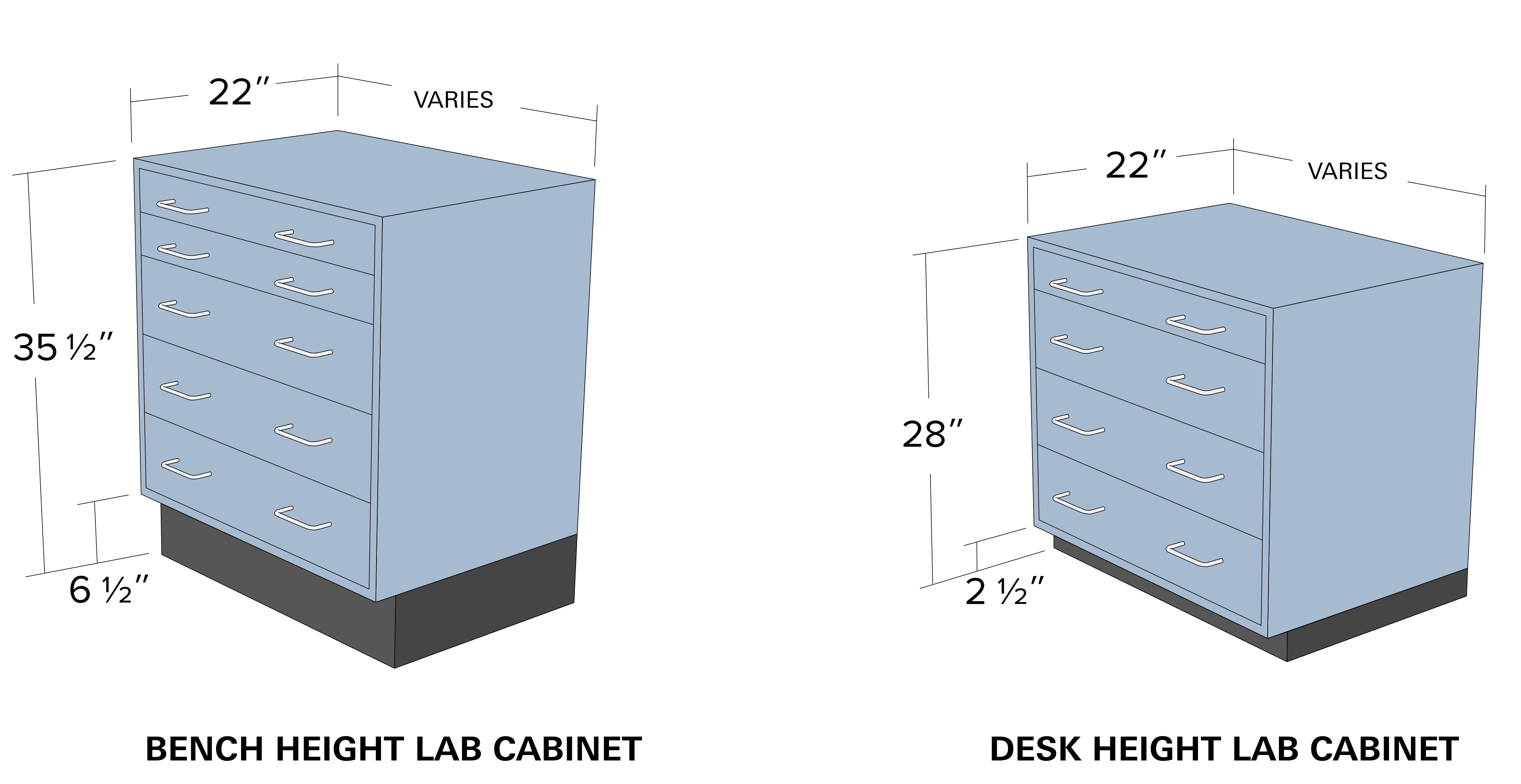
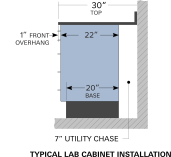
Teclab’s Laboratory(Wetlab) style cabinets are 22" deep. When installed under a standard 30" countertop, there is ample room for plumbing and other utilities behind the cabinets. The drawer fronts and door faces of the laboratory cabinets are designed with an inset (recessed) profile, sitting flush within the cabinet frame. This construction helps shield the cabinet contents from accidental spills by reducing direct exposure at the edges and limiting the pathways for liquids to enter. Each drawer is equipped with its own lock, installed separately to provide secure, compartment-by-compartment storage. The locks can be keyed individually, allowing each drawer to operate with a different key for controlled access, improved organization, and enhanced security where multiple users or varying storage requirements are involved.
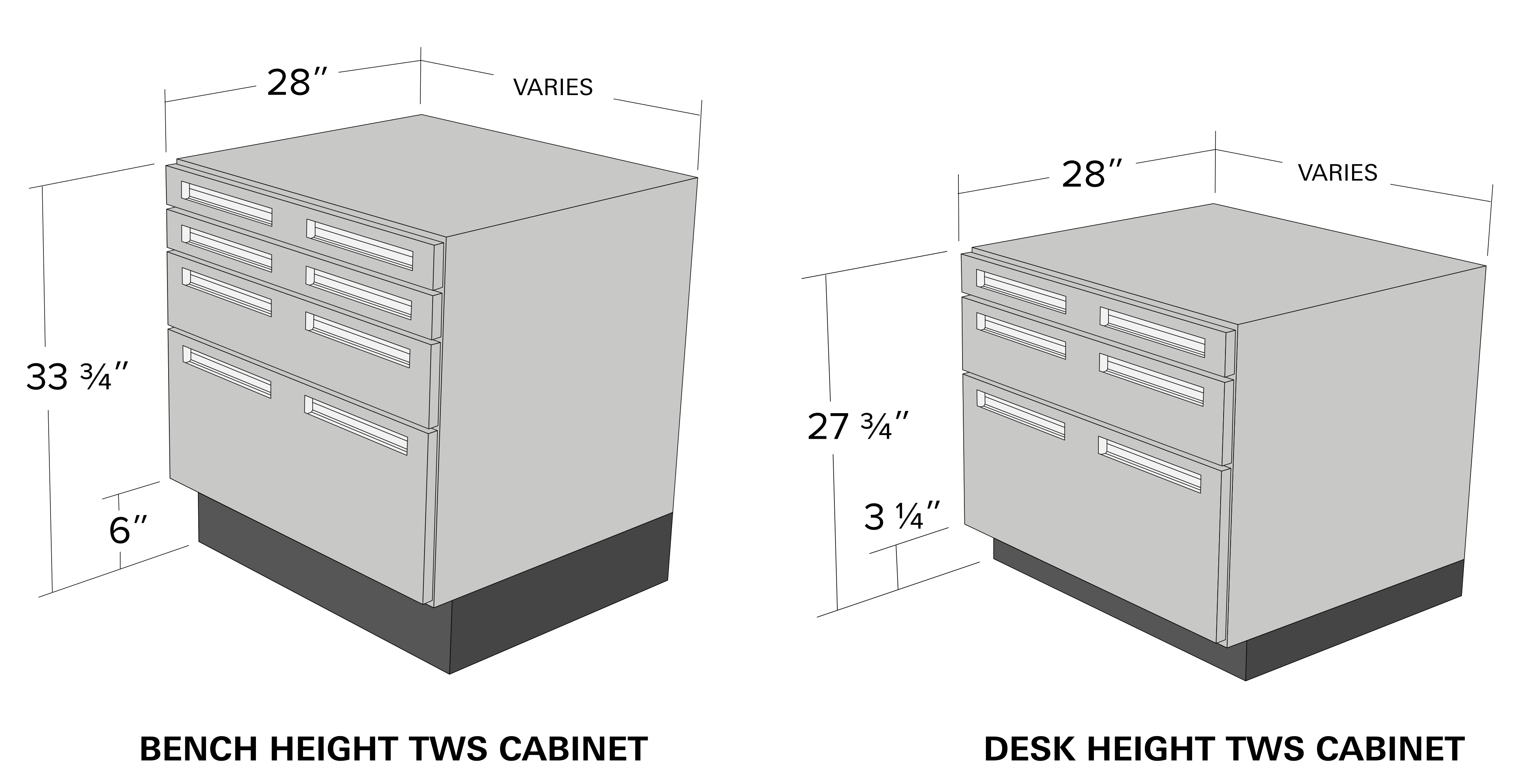
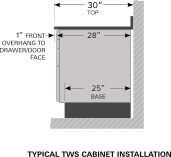
Teclab’s Technical(TWS) style cabinets are 28" deep. The extra depth allows for massive amounts of storage and increased stability in free-standing installations. TWS Cabinets are frequently chosen as the foundation for building a workbench because they are sturdy, modular, and designed to support heavy daily use. When configured as a workbench base, they provide organized storage beneath the work surface while keeping tools and parts easily accessible. For security and convenience, these cabinets commonly use an internal lock-bar mechanism. In this setup, a lock cylinder (operated by a key) engages a metal bar inside the cabinet. When the lock is turned, the bar moves into position to block the drawer latches, preventing any drawer from being opened. Unlocking retracts the bar and releases all drawer latches at once, so a single lock and key can secure—or open—every drawer simultaneously without needing individual drawer locks.